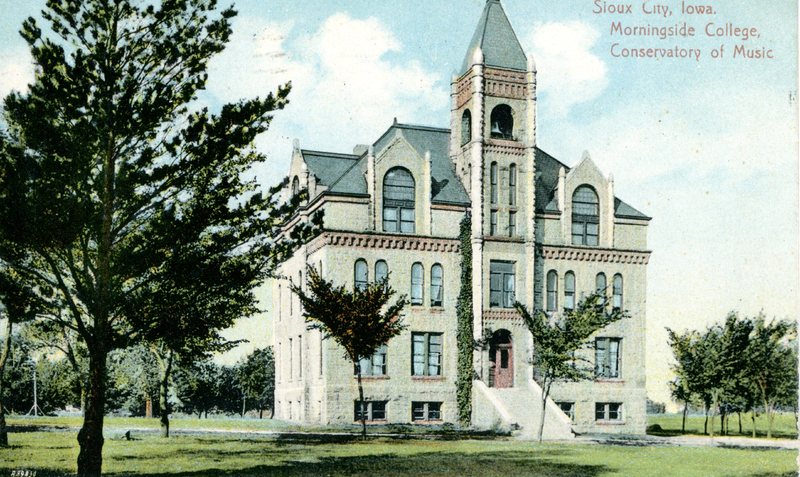
By Gabriel Ruiz — The story of the building known now as Charles City begins, as all timeless classics do, with a real estate scheme. The building’s development was spearheaded and funded by Edwin C. Peters (1836–1917), a Pennsylvania attorney and Civil War marshal who made his first arrival to Sioux City in 1870. Peters was the pioneer settler who founded the suburb and named it “Morningside,” choosing the name for its eastern location where the sun first rises over the city.
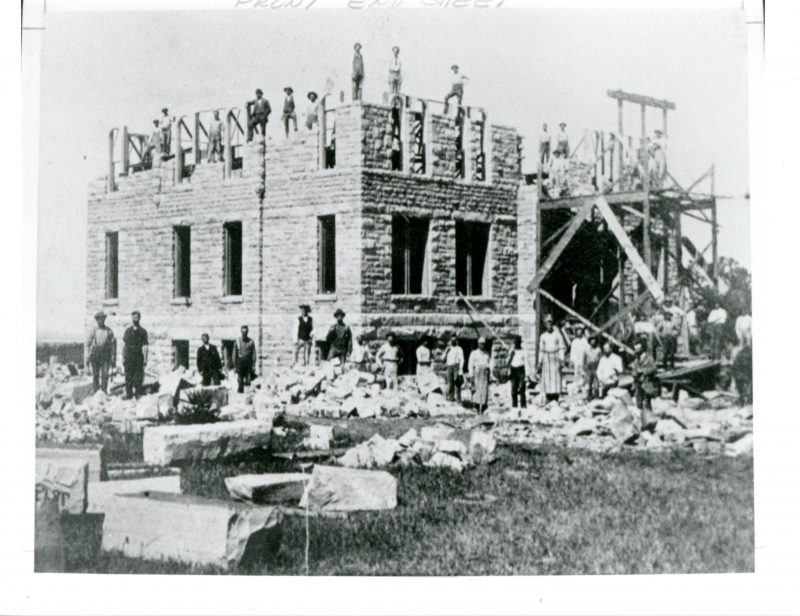
(Morningside College’s Archives)
Peters’ strategy was to use higher education as a marketing tool for land speculation. Having purchased 300–400 acres of cheap farmland, he served as the Vice President of the executive committee for the ‘University of the Northwest,’ a speculative business venture which he believed could provide the cultural and institutional influence necessary to attract residential buyers to the surrounding lots.
initially commissioned as the university’s main hall in 1890, it was the primary structure to legitimize this venture. The sale of residential lots was intended to fund the construction of the university, which would, in turn, increase the value of the remaining lots which would in turn further fund the construction of the university. The project was a financial ouroboros, a businessman buying his own tale. When the financial Panic of 1893 hit, it crashed down on the real estate market as well as his capital ventures. By the next year, the campus property was seized by Woodbury County’s Sheriff to cover debts. Following the bankruptcy, the Methodist Episcopal Church took over the campus and incorporated Morningside College in 1894.
The building was designed in a Richardsonian Romanesque style, an aesthetic used to convince prospective homeowners of the area’s prestige and permanence. It was constructed using Sioux Quartzite mined from Jasper, Minnesota, which is the hardest building stone in the United States. Composed of nearly pure silica, the stone is so dense that it can’t actually be carved in the traditional sense, having to be chipped and crushed into shape. The use of this material was a high-risk marketing expense. It significantly inflated the cost of labor, creating a staggering financial burden.

(J. Borden, National Park Services)
When it first opened, the hall functioned as an entire campus under one roof. Its classrooms, physics lab, administrative offices, and library could all be found inside. The building additionally provided on-site student dormitories and the primary campus dining hall. The original design featured a massive central bell tower which rose high above the roofline, serving as a landmark for the developing suburb.
The gamble backfired in the 1893 crash. The university was left with an expensive, unfinished shell that it could no longer afford to maintain, contributing directly to the institution’s collapse. The cornerstone, which represented the massive capital investment, still bears the signature of the builder, John M. Poorbaugh.
On the night of December 9, 1914, a devastating fire broke out. The intense blaze gutted a large portion of the building’s interior. The necessary reconstruction changed the building’s appearance significantly. While the bell tower hadn’t collapsed, it was determined that the intense heat compromised its structural integrity, and it would need to be torn down.
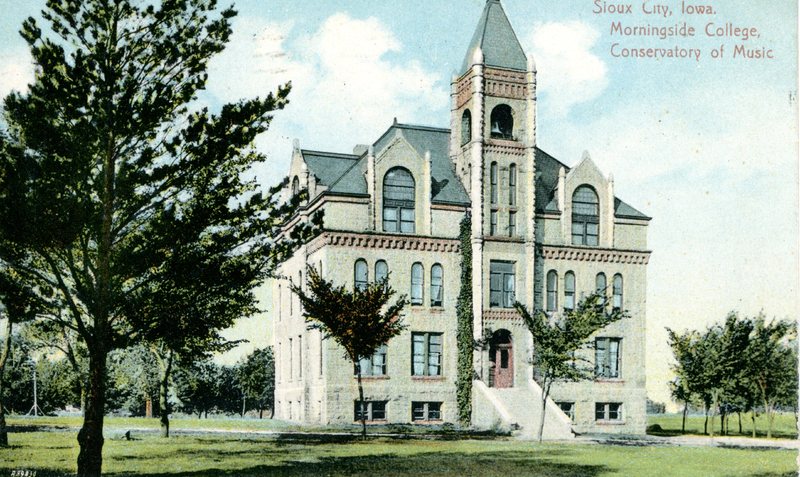
1912
(Morningside College’s Archives)
At a time when the institution was already struggling to make ends meet, repairing a building made of Sioux Quartzite would have been an astronomical expense. They simply couldn’t justify the cost of the specialized masonry work to restore the tower while struggling to pay for basic desks and floorboards. This resulted in the tower being cut off at the third floor; to fill the space where the original gables once stood, windowless dormers were added to the roofline. Additionally, during later renovations, the original exterior front steps were enclosed and now sit inside the building’s entryway.
For several decades following its reconstruction, the building took on a new life and was simply known across campus as the Conservatory. Serving as the college’s dedicated music building, it was the sole location for all music teaching and instruction. According to Morningside alumnus and former faculty member Bruce Forbes, a very active music fraternity utilized a hidden, fourth-floor attic for their activities during these Conservatory days, painting their seal on the wall and moving a piano into the space. When the lower floors were eventually remodeled into standard classrooms and offices, the attic was sealed off. Because the piano was in poor condition and nearly impossible to bring down the narrow stairs, it was simply abandoned up there. To this day, the piano remains sealed in the attic, giving rise to ghost stories of being able to hear it playing late at night.
But how did a building in Sioux City finally come to be named “Charles City”? The answer lies with a sister institution. In addition to the standard Methodist denomination, there was a German Methodist denomination that emphasized its heritage. They had established their own school, Charles City College, in Charles City, Iowa, in 1891. However, after a tornado heavily damaged their campus in 1908 and subsequent financial troubles mounted, the institution closed and officially merged with Morningside in 1914, bringing its students, faculty, funds, and library books. Decades later, in 1958, alumni from both Charles City and Morningside generously funded a major remodeling of the building. In their honor, the structure was officially christened “Charles City College Hall.”
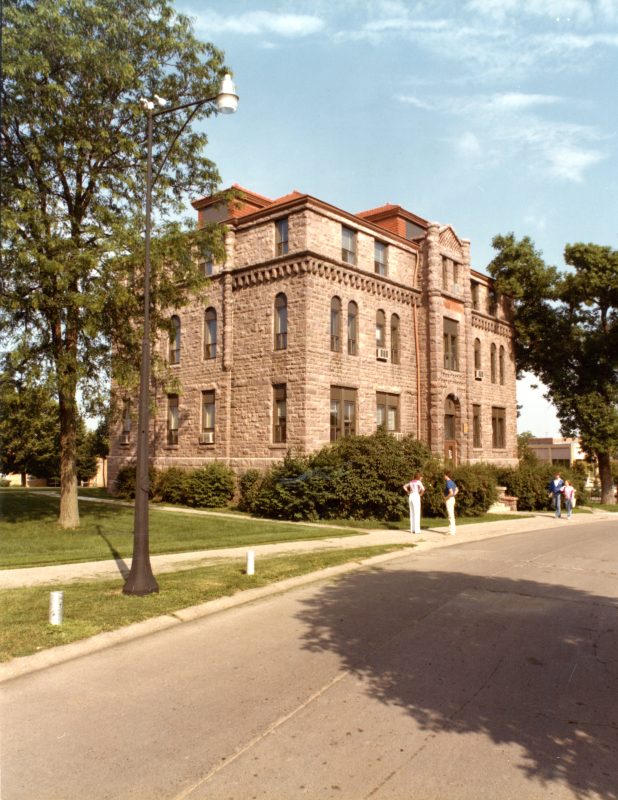
(Morningside College’s Archives)
The building’s era as the Conservatory eventually ended in 1966 when the music department relocated to the newly constructed Eppley Auditorium and its attached music facilities. Following Morningside University’s Great Depression “corn hunts” and the post-war boom, Charles City Hall shifted from housing dormitories and practice rooms to becoming the historical anchor of the university’s academic life.
Today, Charles City serves as a primary hub for the humanities at Morningside. It houses the Department of Humanities, including History, Philosophy, and Religion. The basement level, once home to the university’s first labs, now facilitates classrooms for the School of Arts & Sciences. Although its internal layout has been modernized, the building retains artifacts of its long history.
The building has stood in the same spot for 136 years. Born from Edwin C. Peters’ speculative gamble, and surviving financial collapse, a devastating fire, and changing campus eras, the hall
has endured the test of time. Its history is painted both with shades of ambition and modesty. As the oldest structure on campus, it remains a definitive landmark of Morningside as it has grown to become a cornerstone of higher education here in the Midwest.
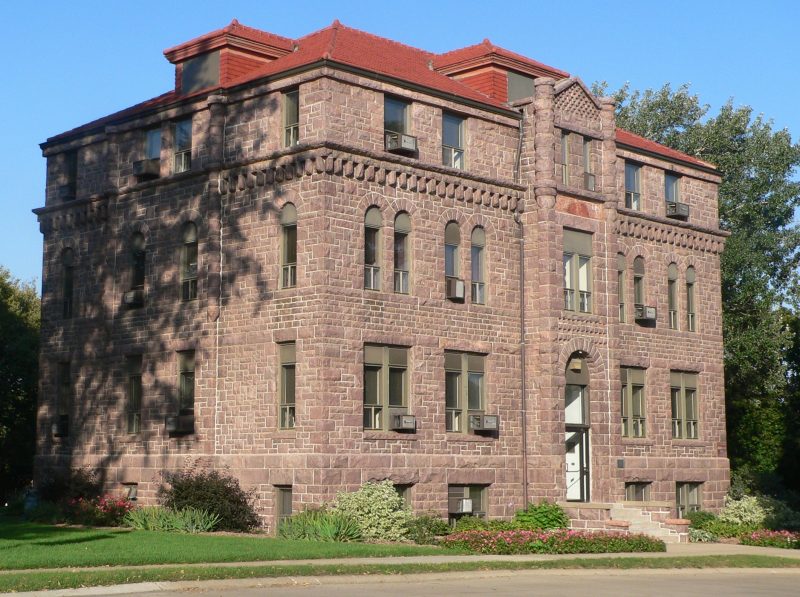
(Ammodramus)




Leave a Reply