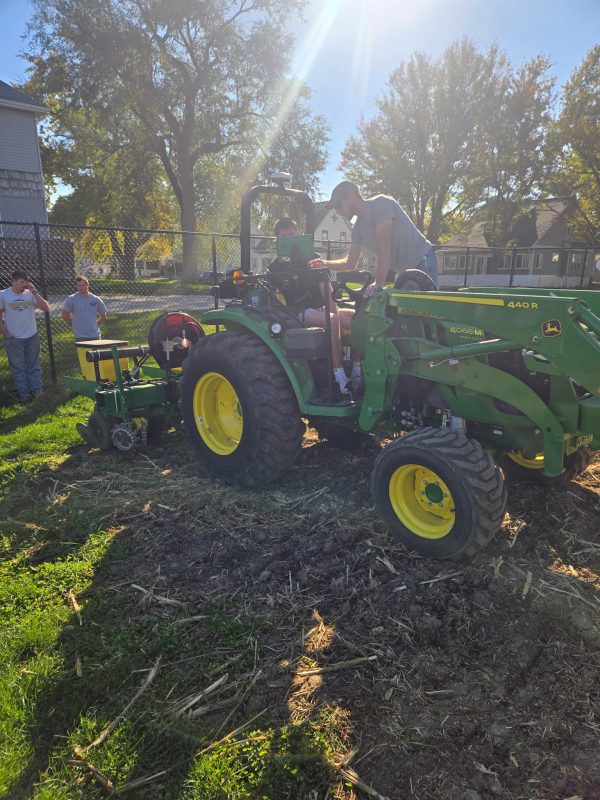
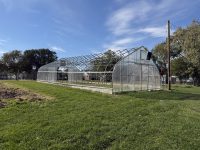
By Tayden Van Pelt – Morningside University students are putting classroom lessons into practice this fall through a cover crop project in the Cargill Outdoor Classroom. The Agricultural Precision class is partnering with the Plant Science class to establish cover crops in designated test plots.
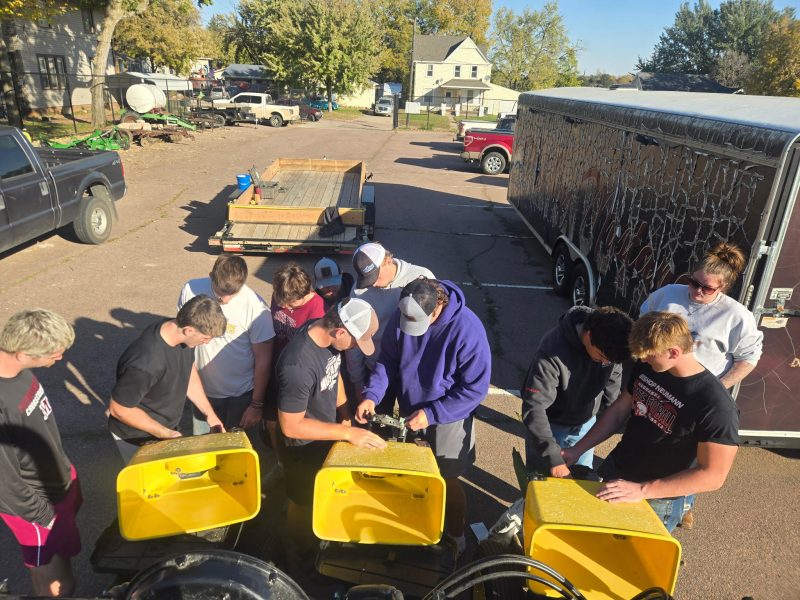
Student groups are responsible for making management decisions for their plots, simulating the decisions farmers make throughout a growing season. The project gives students hands-on experience with soil variability, crop management, and conservation practices while helping maintain the soil’s ability to support future crops grown on campus. Dan Witten, instructor of the Agricultural Precision class, described the project as “closing the loop, so the ground continues to grow food for those on and off campus.”
This year, the Plant Science class recommended several cover crops, including turnips, tillage radishes, rye, and vetch. Each offers benefits for soil health, such as improving soil structure, reducing wind erosion, and adding organic matter to the ground. These benefits can help prepare the plots for next year’s crops.
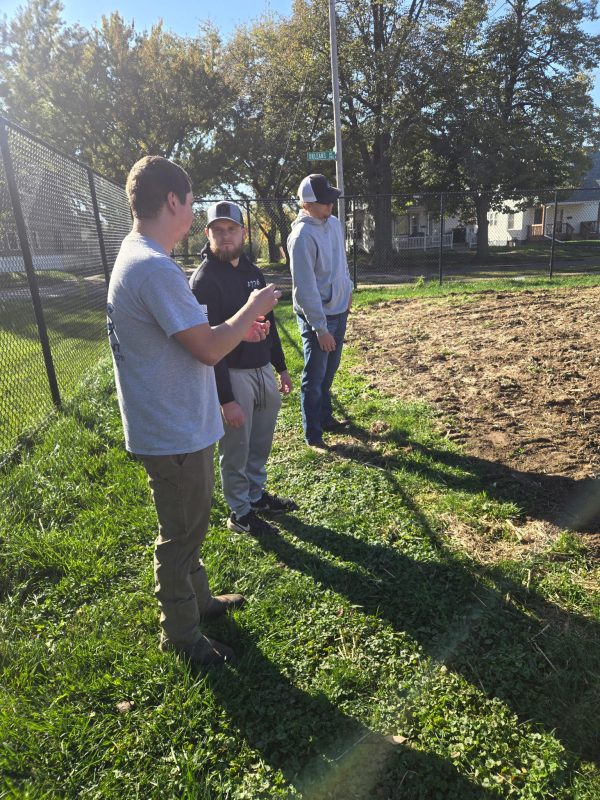
Students also worked with Southwoods Conservation to learn about different seeding methods, connecting precision agriculture concepts with real-world conservation practices. Erik Lindsay, a resource manager for Southwoods Conservation, said the project gives students an opportunity to develop problem-solving skills through practical experience.
“This allows students to learn problem-solving on a real-world scale, which is something that is becoming rare to find in the hiring world,” Lindsay said. “The hands-on experience and situations that these students get to interact with are extremely beneficial later on in the workforce.”
By combining precision agriculture, plant science, and conservation, the project allows students to see how management decisions affect both crop production and long-term soil health. The cover crop project also demonstrates how the Cargill Outdoor Classroom serves as a learning environment beyond traditional lectures, giving students the opportunity to apply their knowledge to real agricultural challenges while contributing to the sustainability of campus-grown crops.

Leave a Reply