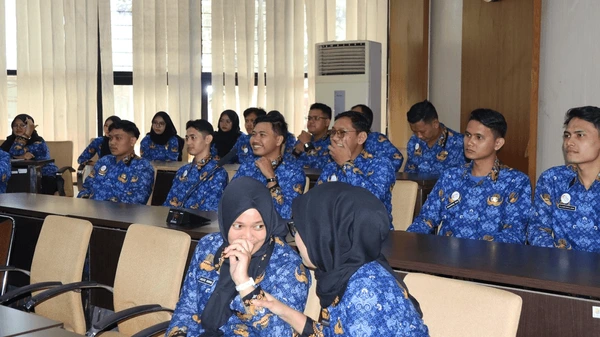
The landscape of public administration in Indonesia is currently undergoing a massive shift. As the government pushes toward the vision of “Indonesia Emas 2045,” the role of the State Civil Apparatus, or ASN (Aparatur Sipil Negara), has never been more critical. Training is no longer just a checkbox for promotion but a strategic necessity to ensure the bureaucracy can handle the complexities of a digital and globalized economy.
In recent years, the Indonesian government has moved away from traditional, classroom-based training toward more dynamic models. This change is driven by the realization that the old way of doing things often resulted in a disconnect between what was learned in a seminar and what was actually needed on the ground. Today, the focus is on competency-based development that aligns with national priority goals.
The Evolution of the Training Landscape
Historically, civil servant training in Indonesia was quite rigid. You had your basic induction training for new recruits and then periodic leadership training for those moving up the ranks. However, with the enactment of Law No. 20 of 2023 concerning the State Civil Apparatus, the legal framework has shifted. Competency development is now framed as both a right and an obligation for every civil servant.
One of the most significant shifts we are seeing in 2026 is the widespread adoption of the ASN Corporate University (CorpU) model. This isn’t a physical building, but rather a strategic learning system. It integrates individual development with the specific goals of the government agency. Instead of sending someone to a generic management course, the CorpU approach looks at what the Ministry of Transportation or the Ministry of Health actually needs to achieve this year.
Integrated Learning Systems
The CorpU model emphasizes that learning happens everywhere, not just in a training center. It uses a 70:20:10 learning philosophy. This means 70% of learning comes from on-the-job experience, 20% from social learning like coaching or mentoring, and only 10% from formal courses. This is a huge departure from the past where the 10% was often treated as the 100%.
To support this, many agencies are now utilizing blended learning platforms. These platforms allow civil servants in remote regions—from Aceh to Papua—to access the same high-quality modules as those in Jakarta. It’s an attempt to level the playing field, though as we’ll discuss later, infrastructure still poses a bit of a challenge in some areas.
The Shift to Digital Governance
Another key driver of training reform is the Electronic-Based Government System (SPBE). The government wants to digitize everything from procurement to public health records. But you can’t have a digital government without digital-ready civil servants. Consequently, digital literacy has become a mandatory part of the curriculum across almost all levels of the bureaucracy.
Training programs now focus on data analytics, cybersecurity, and even basic AI application. The goal is to move past simple computer literacy toward a “digital mindset.” This involves teaching staff how to use data to make better policy decisions rather than just filling out spreadsheets.
Identifying Core Competency Gaps
Despite the progress, significant gaps remain. A major issue identified in recent audits is the “implementation gap.” Civil servants might pass a test on a new regulation, but they often struggle to apply that regulation in a way that actually improves public service. This is particularly true in regional offices where resources are thinner.
Digital literacy is also a mixed bag. While younger Gen Z and Millennial civil servants are quite tech-savvy, there is a noticeable gap among senior officials. Since many senior officials hold decision-making power, their lack of familiarity with digital tools can sometimes create a bottleneck for innovation within their departments.
Technical vs. Soft Skills
There is a growing realization that technical skills alone aren’t enough. Many training programs in 2026 are now pivoting toward “soft skills” or “social-cultural competencies.” These include things like empathy in public service, collaborative leadership, and conflict resolution. In a country as diverse as Indonesia, the ability to navigate different cultural contexts is a vital skill for any public official.
Often, civil servants are very good at following the rules (compliance) but less skilled at problem-solving (creativity). The gap here is in “adaptive capacity.” When a situation doesn’t perfectly fit the SOP, many staff feel paralyzed. Current training initiatives are trying to address this by using simulation-based learning where there is no “perfect” answer.
The Challenge of Regional Disparities
Indonesia’s geography is a natural hurdle. A civil servant in a small district in Kalimantan doesn’t have the same access to high-speed internet or professional networking as someone in Jakarta. This creates a competency gap that isn’t about talent, but about access. Even with online modules, the quality of the “mentoring” part of the 70:20:10 model varies wildly depending on the local leadership.
Digital Transformation and AI Integration
As we move further into 2026, the integration of Artificial Intelligence into public service is no longer a futuristic dream. It’s happening now. The Ministry of Communication and Digital has been leading the charge in providing AI-related training for the ASN. This doesn’t mean every civil servant needs to be a coder, but they do need to understand how AI tools can automate repetitive tasks.
For example, AI is being used to sort through massive amounts of public feedback or to flag irregularities in financial reports. Training programs are being updated to teach civil servants how to “prompt” these systems and, more importantly, how to audit the results for bias or errors.
Security and Data Privacy
With more data moving online, security has become a top priority. Civil servant training Indonesia now includes heavy emphasis on data protection and the Personal Data Protection (PDP) Law. Staff are being trained to recognize phishing attempts and to understand the legal ramifications of data leaks. This is a steep learning curve for many, but the government is making it a non-negotiable part of the yearly training quota.
Emerging Trends: Green Skills and Defense
A very interesting development in the 2026 training cycle is the focus on “Green Skills.” As Indonesia commits to carbon neutrality goals, civil servants in departments like Forestry, Energy, and even Urban Planning need to understand sustainable development. Training now includes modules on carbon trading, renewable energy policy, and climate change adaptation strategies.
The National Defense Component
Another unique aspect of training that has gained traction recently is the involvement of civil servants in the National Reserve Component (Komcad). While this is largely voluntary, the government has started a program to train several thousand civil servants in basic military discipline and national defense. The idea isn’t to turn them into soldiers, but to foster a stronger sense of nationalism and “discipline” that they can bring back to their administrative roles.
While some observers have questioned the necessity of this, the government argues that it helps build character and resilience. It’s certainly a different approach to “professional development” than we’ve seen in the past, and it reflects a broader push to make the bureaucracy more disciplined and mission-oriented.
Strategic Opportunities for Growth
The current shifts in training provide a massive opportunity for the private sector and international organizations to collaborate with the Indonesian government. There is a high demand for specialized training providers who can offer “niche” skills that the internal government training bodies (like LAN) might not yet have mastered.
Collaboration with EdTech
The rise of EdTech in Indonesia has been a godsend for ASN training. Startups are now partnering with government agencies to provide gamified learning experiences. This makes training more engaging for the younger generation of civil servants who find traditional long-form lectures boring. There’s a huge opportunity here to create localized content that speaks to the specific challenges of the Indonesian bureaucracy.
International Partnerships
Indonesia frequently looks to countries like Singapore, South Korea, and Australia for best practices in public administration. There are increasing opportunities for “exchange-style” training where Indonesian civil servants spend time in foreign agencies. These programs are highly sought after and provide a chance for Indonesian officials to see how high-performing bureaucracies handle similar challenges.
Barriers to Effective Training
It would be dishonest to say everything is going perfectly. There are still significant barriers. One of the biggest is the “budget-first” mindset. Sometimes, training is conducted just because there is a budget for it at the end of the year, rather than because there is a clear need. This leads to “rushed” training sessions that don’t provide much lasting value.
- Lack of follow-up after training sessions to ensure skills are being used.
- Resistance to change from older, high-ranking officials who prefer traditional methods.
- Inconsistent internet quality in rural areas affecting online learning modules.
- A “silo” mentality where different ministries don’t share training resources or data.
- Difficulty in measuring the actual ROI of training on public service quality.
Another barrier is the sheer size of the workforce. With over 4 million civil servants, even a small change in policy takes years to filter down to everyone. Ensuring consistency in the quality of training across 38 provinces and hundreds of regencies is a logistical nightmare that the National Institute of Public Administration (LAN) is constantly battling.
The Role of Leadership in Training
Training doesn’t happen in a vacuum. The most successful training programs in Indonesia are the ones where the head of the agency is personally invested in the results. If a Governor or a Minister views training as a waste of time, their staff will too.
In 2026, we are seeing more “Leadership Labs” where senior officials are coached on how to become “Learning Leaders.” These are leaders who don’t just manage tasks but actively encourage their subordinates to take 20 hours of training per year and, more importantly, give them the space to apply what they’ve learned without fear of making a mistake.
Evaluation and Impact Measurement
One of the newest trends is the move toward data-driven evaluation. In the past, the success of a training program was measured by how many people attended and if they liked the food. Now, there is a push to use competency-based assessment to measure actual skill growth.
Agencies are starting to use pre-tests and post-tests, and some are even tracking performance data three to six months after the training. For example, if a group of tax officials undergoes a new customer service training, the agency might look at whether the “satisfaction score” from the public actually went up in the following quarter. This kind of accountability is what will eventually separate the effective programs from the fluff.
Future Outlook for ASN Training
Looking ahead, the future of civil servant training in Indonesia seems to be heading toward hyper-personalization. With the help of AI, the government could eventually create “individual learning paths” for every single civil servant. An AI could look at your career goals, your current performance gaps, and your preferred learning style to suggest exactly which modules you should take this month.
We are also likely to see more “micro-credentialing.” Instead of one big certificate, civil servants might earn “badges” for specific skills like “Data Visualization with PowerBI” or “Public Speaking for Policy Advocacy.” This makes the learning process feel more achievable and allows for a more granular view of the talent pool within the government.
Focus on Ethics and Integrity
Lastly, as Indonesia continues to fight corruption, training in ethics and integrity is being woven into every single module. It’s not just a standalone “anti-corruption” class anymore. It’s about teaching staff how to make ethical decisions when faced with complex dilemmas in their day-to-day work. This “soft” side of training is perhaps the most important for the long-term health of the Indonesian state.
Summary of Key Points
In conclusion, the approach to civil servant training Indonesia is evolving from a rigid, centralized model into a more flexible, strategic, and digital-first system. The implementation of the Corporate University model and the focus on digital literacy are massive steps forward. However, the government must still address the persistent gaps in regional access and the “compliance-only” mindset that can sometimes stifle the impact of these programs. By leveraging new technologies and focusing on both technical and soft skills, Indonesia has a real opportunity to build a world-class bureaucracy ready for the challenges of 2045.