Modern power supply systems operate in an increasingly global and technology-driven environment. Electrical equipment is no longer confined to one country, one grid standard, or one operating frequency. Machines, testing equipment, aerospace systems, and industrial tools are often designed for specific power frequencies, yet they must function reliably across regions with different electrical standards. This is where frequency conversion becomes essential.
A frequency converter plays a critical role in ensuring that electrical equipment receives the correct power frequency it was designed to operate on. Unlike motor control devices, these systems focus purely on converting input power frequencies commonly 50 Hz, 60 Hz, or 400 Hz into a stable and compatible output. This article explores the key benefits of using frequency conversion technology in power supply systems and explains why it is a vital component in many industries.
Understanding Frequency Conversion in Power Supply Systems
Before examining the benefits, it is important to understand what frequency conversion means in the context of power supply systems.
Electrical grids around the world operate at different frequencies. Most countries use either 50Hz or 60Hz power. However, certain specialized applications—such as aerospace, defense, avionics testing, and military equipment—require 400Hz power. Equipment designed for one frequency may malfunction, overheat, or suffer long-term damage if operated at an incorrect frequency.
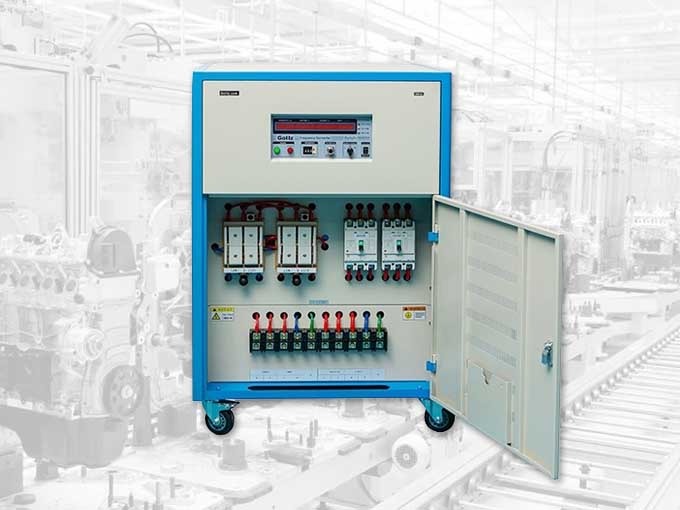
A frequency converter 50Hz/60Hz/400Hz is a dedicated power solution that takes an incoming electrical supply and converts it to a different frequency while maintaining stable voltage and waveform quality. It is important to note that this technology is not a Variable Frequency Drive (VFD). VFDs are designed to control motor speed, whereas frequency conversion systems are designed solely to provide the correct power frequency for equipment operation.
Compatibility with Global Power Standards
One of the most significant benefits of frequency conversion is compatibility with international power standards. As businesses expand globally, they often deploy equipment manufactured in regions with different electrical specifications.
For example:
* European equipment typically operates at 50 Hz
* North American equipment typically operates at 60 Hz
* Aviation and military systems often require 400 Hz
Without frequency conversion, companies would need to replace or redesign equipment for each region. By using a frequency converter, the same equipment can be safely and efficiently operated anywhere in the world, regardless of local grid frequency.
This capability reduces capital expenditure and allows organizations to standardize their equipment across multiple locations.
Protection of Sensitive and High-Value Equipment
Electrical equipment is designed to operate within strict frequency tolerances. Even small deviations can cause excessive heat, vibration, electrical stress, or premature failure. Sensitive systems such as laboratory instruments, testing benches, avionics systems, and military electronics are especially vulnerable.
A frequency converter ensures that equipment receives a precise and stable frequency output, protecting it from:
* Overheating
* Electrical noise
* Performance degradation
* Unexpected shutdowns
By providing clean and stable power, frequency conversion systems extend equipment lifespan and reduce maintenance costs.
Reliable Operation for 50/60/400 Hz Applications
Many industries require operation across multiple frequency standards. Manufacturing plants, test laboratories, and defense contractors often test equipment under different frequency conditions to meet regulatory and operational requirements.
Frequency conversion systems allow seamless switching or configuration for:
* 50 Hertz operation
* 60 Hertz operation
* 400 Hertz operation
This flexibility is especially valuable in testing and certification environments, where equipment must be validated under various power conditions. Instead of relying on multiple power sources or generators, a single frequency conversion system can meet all requirements.
Improved Power Quality and Stability
Power quality is a major concern in modern electrical systems. Fluctuations in frequency, voltage instability, and harmonic distortion can negatively affect equipment performance.
A frequency converter is designed to deliver:
* Stable output frequency
* Controlled voltage levels
* Reduced electrical noise
* Improved waveform consistency
This improved power quality is particularly important for electronic loads, precision instruments, and aerospace systems where even minor power irregularities can lead to inaccurate results or system faults.
Essential for Aerospace and Defense Systems
The aerospace and defense sectors rely heavily on 400 Hz power systems. Higher frequency power allows for smaller transformers, lighter components, and improved efficiency—critical advantages for aircraft and military platforms.
Ground support equipment, avionics testing systems, radar units, and military simulators all require reliable 400 Hz power. Frequency conversion enables these systems to operate from standard utility supplies while maintaining strict compliance with aerospace power standards.
Without proper frequency conversion, testing and operation of such equipment would not be possible in conventional facilities.
Energy Efficiency and Operational Cost Savings
Replacing equipment or maintaining multiple power infrastructures is expensive. Frequency conversion offers a cost-effective alternative by allowing existing power sources to be used efficiently.
Key cost-saving benefits include:
* Reduced need for multiple generators
* Lower equipment replacement costs
* Improved energy utilization
* Reduced downtime due to power mismatch issues
Over time, these savings can be substantial, especially for organizations operating across multiple regions or industries.
Enhanced Flexibility for Testing and R&D Environments
Research and development facilities often require flexible power solutions to test products designed for different markets. Engineers may need to simulate real-world operating conditions across various power frequencies.
Using a frequency converter allows R&D teams to:
* Test equipment under 50 Hz, 60 Hz, and 400 Hz conditions
* Validate performance before global deployment
* Ensure compliance with international standards
This flexibility accelerates product development cycles and improves overall product reliability.
Reduced Risk of Human Error
Manually connecting equipment to incompatible power sources can result in costly mistakes. Incorrect frequency application may cause immediate damage or long-term reliability issues.
Frequency conversion systems reduce this risk by providing a controlled and standardized power output. Operators do not need to worry about local grid differences or manual adjustments, which improves safety and operational confidence.
Long-Term Reliability and System Integration
Power supply systems are long-term investments. Integrating frequency conversion into these systems ensures adaptability to future needs. As equipment evolves and power requirements change, a frequency converter provides a scalable solution that supports new applications without major infrastructure changes.
This makes frequency conversion a future-proof choice for organizations planning long-term operations.
Conclusion
In an increasingly interconnected and technology-dependent world, power compatibility is no longer optional, it is essential. The benefits of using a frequency converter in power supply systems extend far beyond simple frequency adjustment. From protecting valuable equipment and improving power quality to enabling global compatibility and supporting specialized 400 Hz applications, frequency conversion plays a vital role in modern electrical infrastructure.
Most importantly, it is critical to understand that a frequency converter is not a VFD. Its purpose is not motor speed control but precise frequency transformation for reliable and safe equipment operation across 50Hz, 60Hz, and 400Hz environments.
For industries that demand accuracy, reliability, and global flexibility, frequency conversion is not just a convenience it is a necessity.